
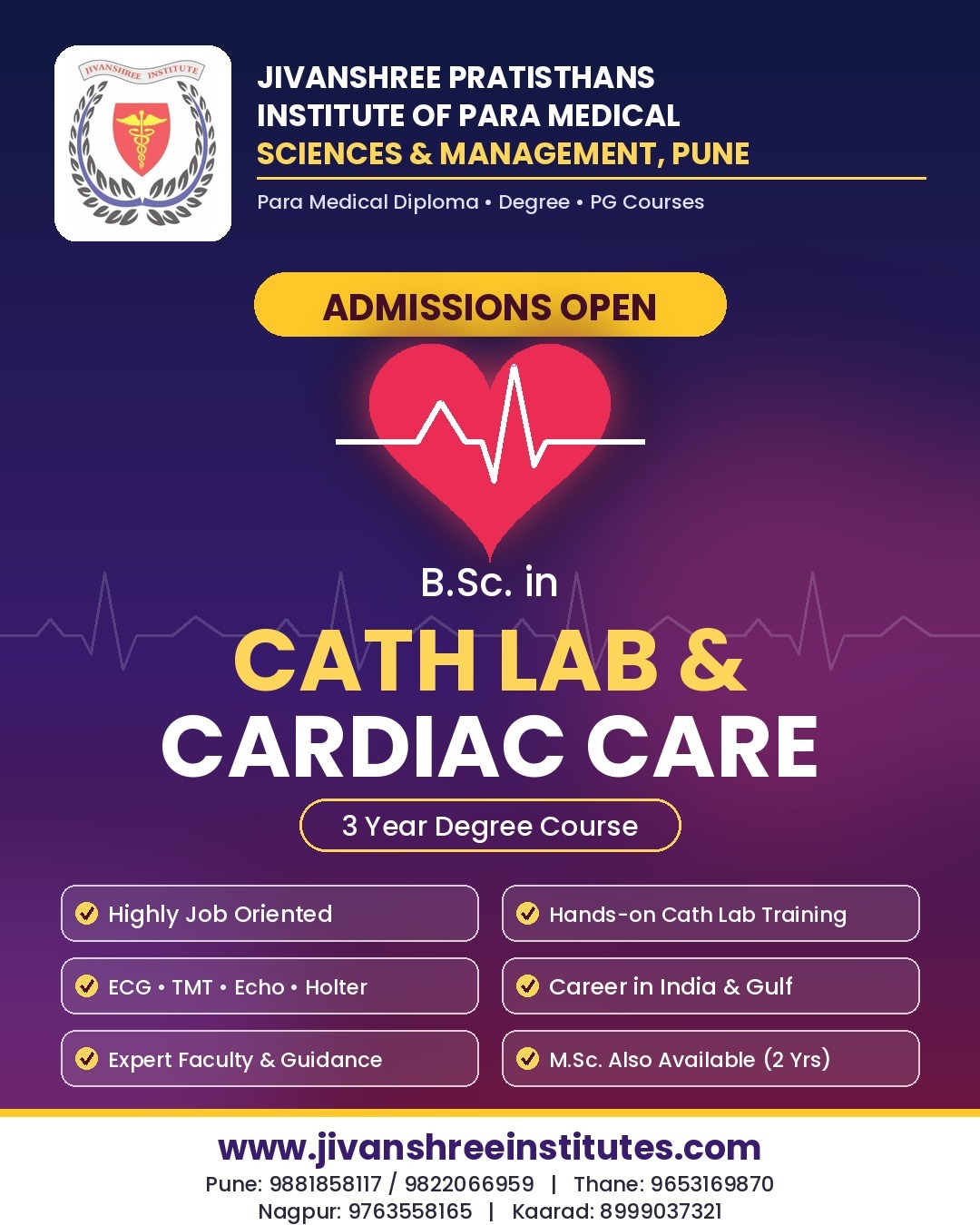
BSc Cath Lab Technology and Cardiac Care Technology
These are two closely related paramedical degrees focused on heart care.
Duration: Usually 3 years of study and 1-year hospital internship
Eligibility: 10+2 with Physics, Chemistry and Biology, typically with a minimum of 45-50%. institutes also accept Maths instead of Biology. Admission is mostly merit-based, though some universities
What you study: Anatomy and physiology, cardiac pathology and pharmacology, ECG, TMT, echocardiography, hemodynamics, CPR/BLS/ACLS, radiation safety, infection control, and the use of cardiac equipment such as defibrillators and pacemakers.
How the two differ:
Cardiac Care Technology (CCT) is broader and often more non-invasive. You work with ECG, echo, stress tests, Holter monitoring, and patient monitoring in the ICU or CCU.
Cath Lab Technology is more procedure-focused. You assist cardiologists during angiography, angioplasty and pacemaker implantation, handle sterile instruments, operate the imaging and hemodynamic systems, and monitor the patient during the procedure.
Careers: Cath lab technologist, cardiac technician, echo or ECG technician, CCU technician, or cardiac technologist in hospitals, diagnostic centres, and device companies (Medtronic, Abbott, etc.). Demand is strong in India and in the Gulf countries.
Pay (approximate): Freshers in India often start around ₹15, 000-30, 000 per month. This rises with experience and skill in cath lab procedures, and overseas pay is considerably higher.
Further study: M.Sc. in Cardiac Technology, PG diplomas, or related paths like perfusion technology and echocardiography fellowships.
Typical Syllabus (3 years + internship)
Year 1: Foundations
Human anatomy and physiology (focus on the cardiovascular system)
Biochemistry
Basics of pathology and microbiology
Basic computer skills and communication
Introduction to cardiac technology
Medical ethics, infection control, first aid, and BLS
Year 2: Core cardiac subjects
Cardiac pathology and pharmacology
ECG: principles, recording, and interpretation
TMT (stress testing) and Holter monitoring
Echocardiography basics
Cardiac instruments and equipment
Patient monitoring and emergency care (CPR, ACLS)
Year 3: Advanced and specialised
Cath lab procedures: angiography, angioplasty (PTCA), stenting, pacemaker/ICD implantation
Hemodynamics and pressure monitoring
Radiation physics and safety
Cardiac imaging (fluoroscopy, intravascular tools like IVUS/OCT)
Sterile techniques and instrument handling
Cardiac emergencies and critical care
Clinical postings and project work
Internship (1 year)
Hands-on training in the cath lab, CCU/ICU, echo, and ECG/TMT departments under cardiologists and senior technologists.
Cath Lab Technology leans more toward the procedure and radiation subjects, while Cardiac Care Technology gives more weight to ECG, echo, and critical care