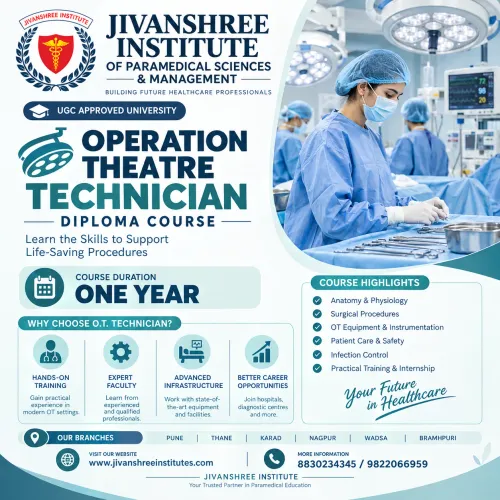
Diploma in Operation Theatre Technician (DOTT)
Introduction
The Diploma in Operation Theatre Technician (DOTT) is a specialized paramedical course designed to train students in the skills and knowledge necessary to work in the operation theatre of hospitals, nursing homes, or medical facilities. With the ever-increasing demand for surgical procedures and critical care support in modern medicine, operation theatre technicians (OTT) play a vital role in ensuring that surgical procedures are conducted in a sterile and organized environment.
This diploma course prepares candidates to assist surgeons, anaesthesiologists, and nurses in various pre-operative, intra-operative, and post-operative procedures. It involves not just handling surgical instruments but also understanding the functioning of operation theatre equipment, infection control practices, and emergency response protocols.
Course Overview
Course Name: Diploma in Operation Theatre Technician
Course Duration: 1 to 2 years (depending on the institution)
Eligibility Criteria: 10+2 with Science (Biology preferred) from a recognized board
Admission Process: Merit-based or Entrance Test (varies by institution)
Mode of Study: Full-time, Offline/Online (Hybrid in some institutions)
Objectives of the DOTT Course
The main objective of the DOTT program is to:
Provide students with the technical knowledge and skills required to assist in surgical and emergency settings.
Train candidates in sterilization techniques, patient monitoring, and the handling of surgical instruments and equipment.
Prepare professionals who can maintain hygiene, safety, and infection control in operation theatres.
Create a workforce that can support surgeons and anesthetists during surgical procedures.
Subjects & Syllabus
While the syllabus may vary slightly depending on the institution, core subjects covered in the DOTT program include:
Human Anatomy & Physiology
Structure and functions of the human body
Major organs and systems
Introduction to Operation Theatre
Roles and responsibilities of OTT
Layout and equipment of the OT
Surgical Instruments and Sterilization
Types and uses of surgical instruments
Cleaning, packing, autoclaving, and sterilization methods
Patient Care and Monitoring
Pre-operative and post-operative patient care
Basic life support (BLS), CPR, and first aid
Infection Control & Biomedical Waste Management
Aseptic techniques
Handling and disposal of medical waste
Anaesthesia Techniques
Basics of anaesthesia
Anaesthetic equipment and drugs
Medical Ethics & Laws
Patient rights, consent, and confidentiality
Legal responsibilities of technicians
Emergency Procedures and Critical Care
Handling trauma and emergency surgical cases
Support in ICU and emergency rooms
Clinical Training / Internship
Hands-on experience in hospitals
Real-time surgical procedure assistance
Skills Required
A successful Operation Theatre Technician should possess a blend of technical and soft skills:
Attention to detail and precision
Ability to work under pressure
Good communication and teamwork skills
Basic medical knowledge
Quick decision-making
Stamina and physical strength
Strong ethical standards and patience
Career Opportunities
After completing a Diploma in Operation Theatre Technology, students can find employment in:
Government and Private Hospitals
Trauma Centers
Surgical Centers
Nursing Homes
Emergency Medical Services
Maternity Homes
Military and Defense Medical Facilities
Job roles include:
Operation Theatre Technician
Surgical Assistant
Anaesthesia Technician
OT Manager/Supervisor
Emergency Room Assistant
Medical Lab Assistant (in some cases)
Salary Expectations
The salary of an OT Technician depends on experience, location, and type of healthcare facility. Here’s a general idea:
Freshers: ₹12, 000 – ₹18, 000 per month
Experienced Professionals (3–5 years): ₹20, 000 – ₹30, 000 per month
Senior Technicians / Supervisors: ₹35, 000 – ₹50, 000+ per month
In Gulf countries or Western nations, salaries are significantly higher and can range from ₹80, 000 to ₹2, 00, 000 per month depending on experience and certifications.
Higher Education and Certification Options
After completing a diploma, students can opt for:
B.Sc in Operation Theatre Technology
B.Sc in Anaesthesia Technology
Postgraduate Diploma in OT Management
Specialized certifications in Laparoscopy, Endoscopy, and Robotic Surgery Assistance
International Certifications (e.g., ACLS, PALS, BLS by AHA)
Pune
08048035331
+918830234345
 Chat with us
 Chat with us