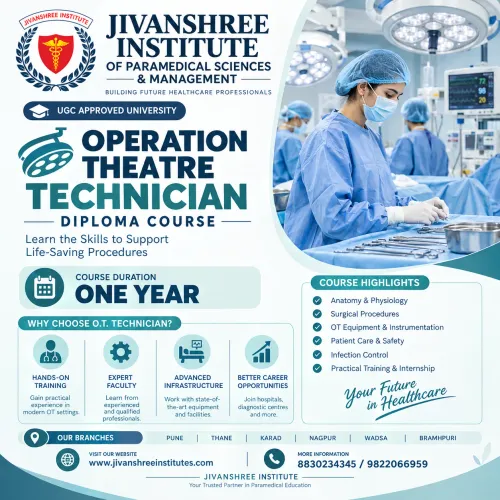

Diploma in Operation Theatre Technology (DOTT)
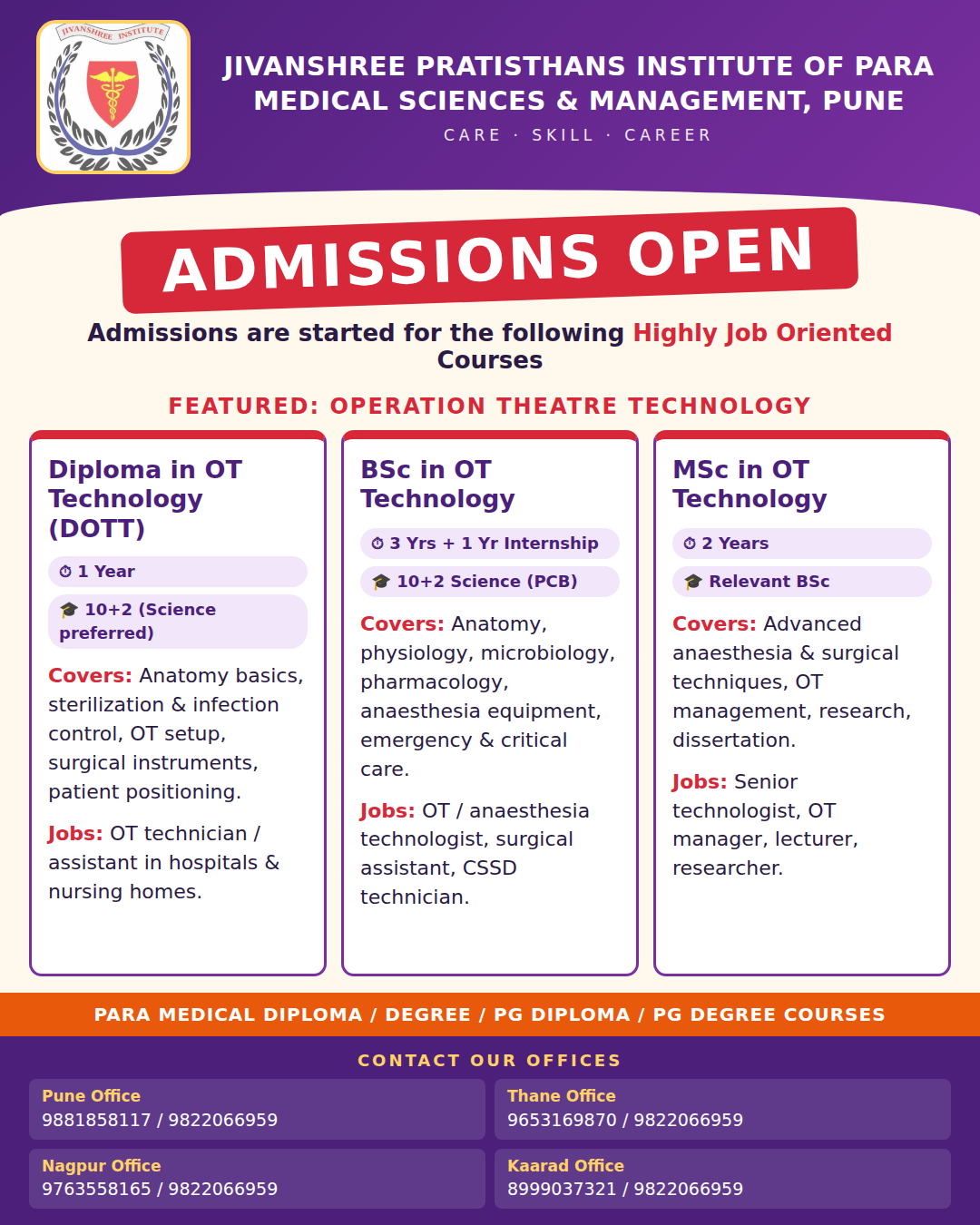
Duration: usually years.
Eligibility: 10+2 (often with science, physics/chemistry/biology), though some institutes accept 10th pass for certificate-level courses.
Covers: basics of anatomy and physiology, sterilization and infection control, OT setup and maintenance, surgical instruments, patient positioning, and assisting surgeons and anaesthetists.
Jobs: OT technician or assistant in hospitals, nursing homes, and day-care surgery centres.
BSc in Operation Theatre Technology (or Anaesthesia & OT Technology)
Duration: 3 years of study plus about internship .
Eligibility: 10+2 with science (PCB), usually with minimum marks set by the university.
Covers: anatomy, physiology, microbiology, pharmacology, anaesthesia equipment, surgical procedures across specialities, emergency and critical care, and hospital safety protocols.
Jobs: OT technologist, anaesthesia technologist, surgical assistant, CSSD (sterile services) technician.
MSc in Operation Theatre Technology (or Anaesthesia Technology)
Duration: 2 years.
Eligibility: a relevant BSc (OTT, Anaesthesia Technology, or a related allied health science).
Covers: advanced anaesthesia and surgical techniques, OT management, research methods, and a dissertation.
Jobs: senior OT technologist, OT supervisor or manager, clinical instructor, lecturer, or research roles.
Career path: Diploma, then BSc, then MSc. Demand is steady because hospitals need trained OT staff, and salaries rise with specialization and experience.