
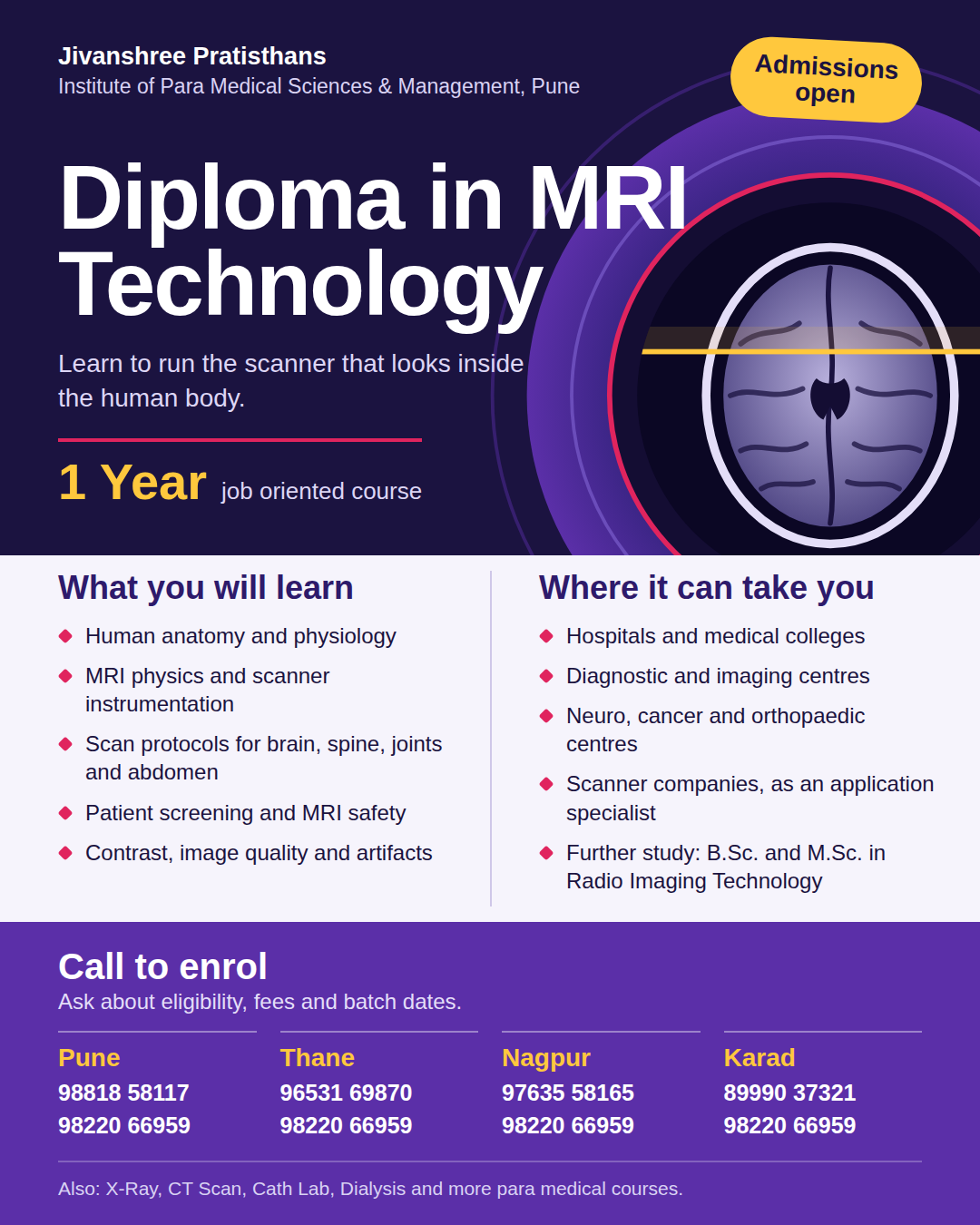
Diploma in MRI
What it is ?
A diploma in MRI technology (sometimes offered as a Diploma in Radiology & Imaging Technology with an MRI specialisation) teaches you to operate MRI scanners, position patients, run scan protocols, and produce diagnostic-quality images for radiologists.
What the work involves (day to day)
Screening patients for metal implants, pacemakers, pregnancy, and allergies before they enter the scan room
Explaining the procedure, positioning the patient, and fitting the right coil
Choosing and running scan protocols for the brain, spine, joints, abdomen, heart and so on
Giving contrast (gadolinium) under a radiologist's or doctor's supervision
Checking image quality, repeating sequences if there are motion artifacts, and sending images to the radiologist
Keeping the scanner room safe, since the magnet is always on
Record keeping and coordinating with radiologists, nurses, and front-desk staff
Where you can work
Hospitals (government and private)
Standalone diagnostic and imaging centres, such as the large chains
Cancer and neuro-specialty centres
Sports medicine and orthopaedic clinics
Mobile MRI services
Medical college and research institutes
Opportunities and growth paths
Senior MRI technologist / chief technologist: supervising a team or a whole imaging department
Application specialist: working for scanner manufacturers (Siemens, GE, Philips and others), training hospital staff and supporting installations
Service or field engineer: if you lean toward the technical and hardware side, usually with an additional technical background
Research and clinical trials: helping run imaging studies at research institutes and pharma-linked centres
Teaching: as a lecturer or clinical instructor in paramedical and imaging programmes
Further study: a B.Sc. and M.Sc. in Medical Imaging Technology, which open up senior and academic roles
Working abroad: possible in the Gulf, UK, Australia, Canada, and the US, but you generally need recognised qualifications and local certification or registration