
Diploma for technicians (Diploma in Radiology and Imaging Technology, or similar)
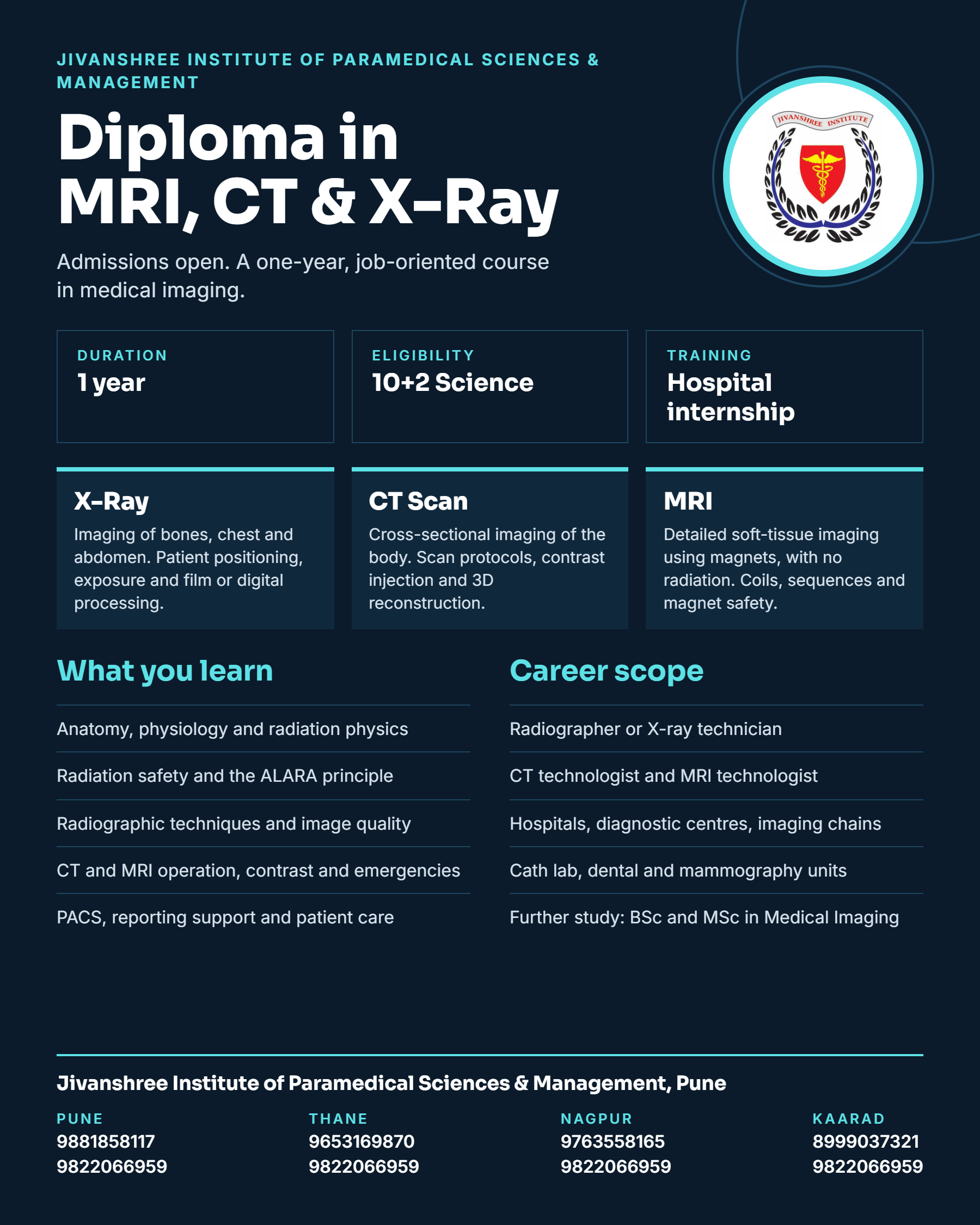
Eligibility: Usually 10+2 with science (Physics, Chemistry, Biology), though some programs accept other backgrounds.
Duration: Typically 1 years, with an internship.
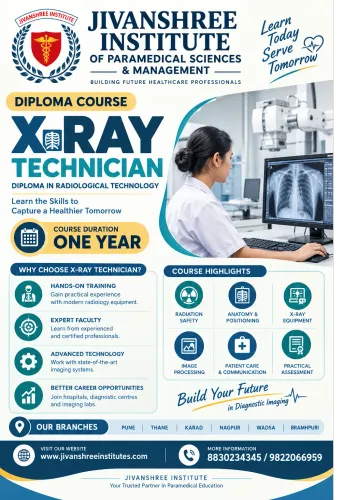
What you learn: Operating X-ray, CT, MRI and ultrasound equipment, positioning patients, radiation safety and basic image quality checks.
Careers: Radiographer or imaging technician in hospitals, diagnostic centres and clinics.
Pathway: Many people continue to a BSc in Radiology/Medical Imaging Technology.
Scope (career prospects)
Technician diploma (radiographer/imaging technologist)
Jobs: X-ray, CT, MRI, mammography or ultrasound technician in hospitals, diagnostic centres, clinics and imaging chains.
Other roles: Cath lab technician, dental radiography, equipment application specialist, or sales and service for imaging companies.
Growth: Demand is steady because imaging is part of almost every diagnosis. You can move up to senior technologist, modality specialist (CT or MRI) or department supervisor.
Further study: BSc in Medical Imaging, then MSc, or work abroad after meeting that country’s certification rules.
Pay: Entry-level salaries are usually modest and rise with experience and specialisation, especially in CT and MRI.
What you learn
Technician course
Basic anatomy and physiology
Radiation physics and how X-rays are produced
Patient positioning for different body parts
Operating X-ray, CT, MRI and ultrasound machines
Radiation safety (ALARA principle, shielding, dose monitoring)
Contrast agents and handling emergencies
Image quality, film and digital processing (PACS)
Patient care and infection control
Clinical training in a hospital