
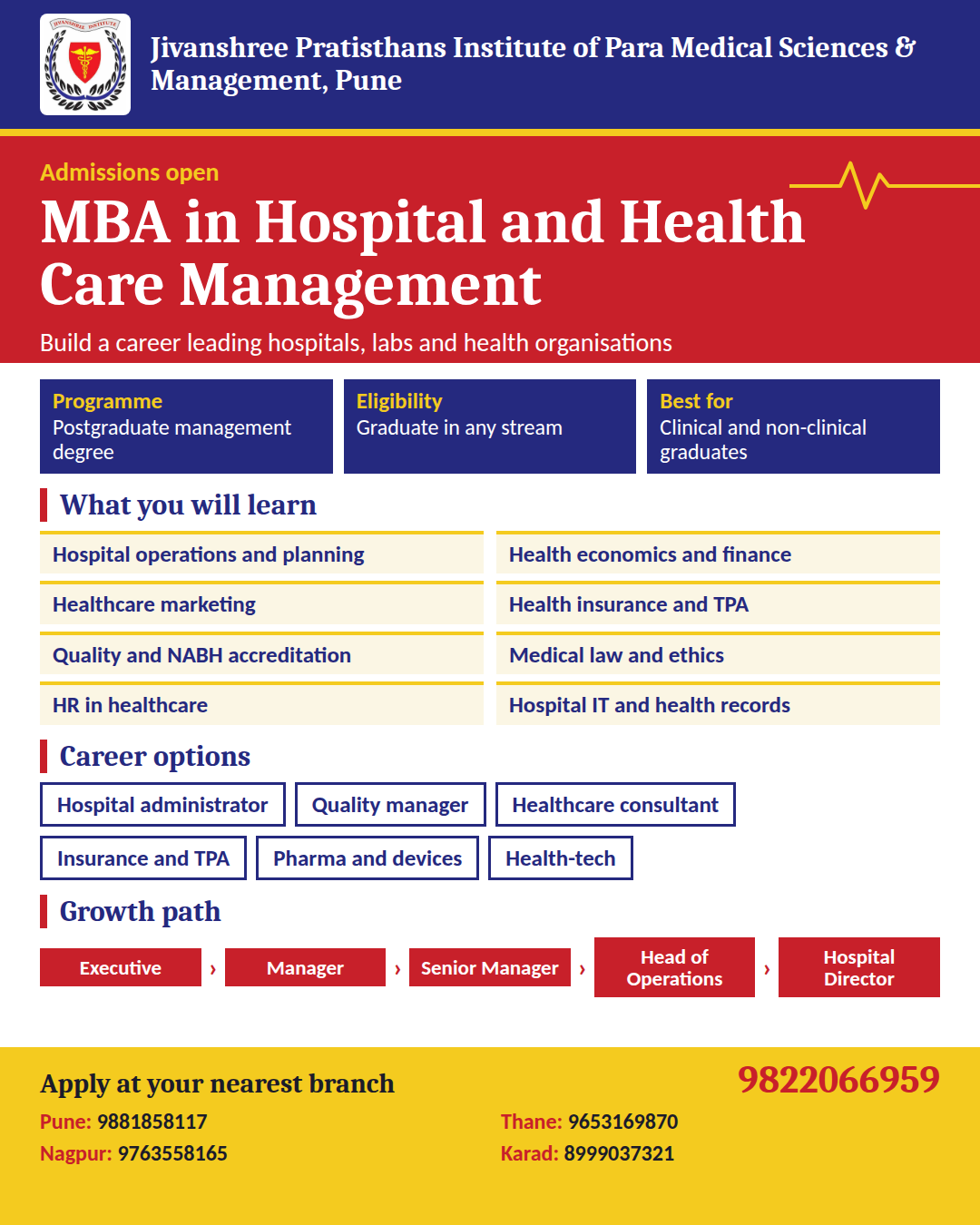
An MBA in Hospital and Healthcare Management is a postgraduate management degree focused on running hospitals, clinics, health-tech firms, insurers, and other healthcare organizations.
Duration and eligibility
It's usually a 2-year full-time program ( include 6months internship)
You typically need a bachelor's degree with at least 50% marks. , though clinical backgrounds (MBBS, BDS, BPT, nursing, pharmacy, life sciences) are preferred.
Typical subjects
Healthcare operations and hospital planning, health economics and finance, healthcare marketing, medical records and health informatics, quality and accreditation (NABH, JCI), health insurance and policy, human resources in healthcare, medical law and ethics, and supply chain and pharmacy management. Most programs include a summer internship or hospital placement.
Career Scope
Healthcare is one of India's fastest-growing sectors. Hospital chains are expanding into tier-2 and tier-3 cities, health insurance coverage is rising (Ayushman Bharat, private insurers), and health-tech, diagnostics, and medical tourism are all growing. All of this needs trained managers, not just doctors.
Where you can work
Hospitals and clinics: Apollo, Fortis, Max, Manipal, Narayana, and smaller chains. Roles include operations head, quality and NABH coordinator, patient experience manager, and business development.
Health insurance and TPAs: Claims, underwriting, and provider network management.
Consulting: Healthcare strategy, hospital planning, and process improvement.
Pharma and medical devices: Product management, sales and marketing, market access.
Health-tech and startups: Practo, PharmEasy, and similar companies. Roles include operations, product, and growth.
Public health and NGOs: Program management, government health missions, and international bodies like WHO or the Gates Foundation.
Abroad: Possible, but usually needs additional certification or local experience.
What to Learn
Core management skills
Healthcare operations and process management
Finance and budgeting, including hospital costing and revenue cycle
Marketing and patient experience
HR and team management (doctors, nurses, and admin staff work very differently)
Leadership and communication
Healthcare-specific knowledge
NABH and JCI accreditation standards
Health insurance, claims, and TPA processes
Medical law and ethics, including patient rights and consent
Health policy (Ayushman Bharat, National Health Mission)
Hospital planning and supply chain, including pharmacy and equipment procurement
Technical and digital skills
Excel and data analysis, ideally basic Power BI or Tableau
Hospital Information Systems (HIS) and electronic medical records
Health informatics and basics of AI in healthcare
Telemedicine platforms