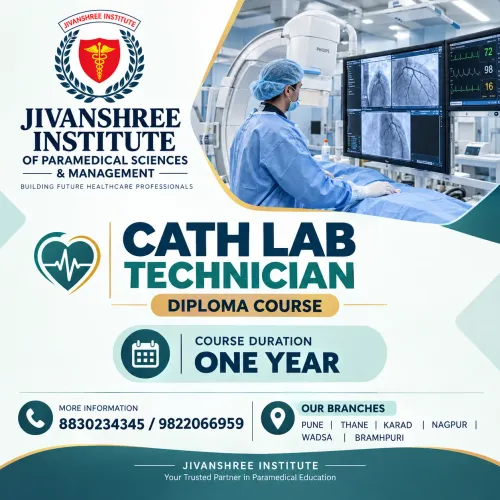

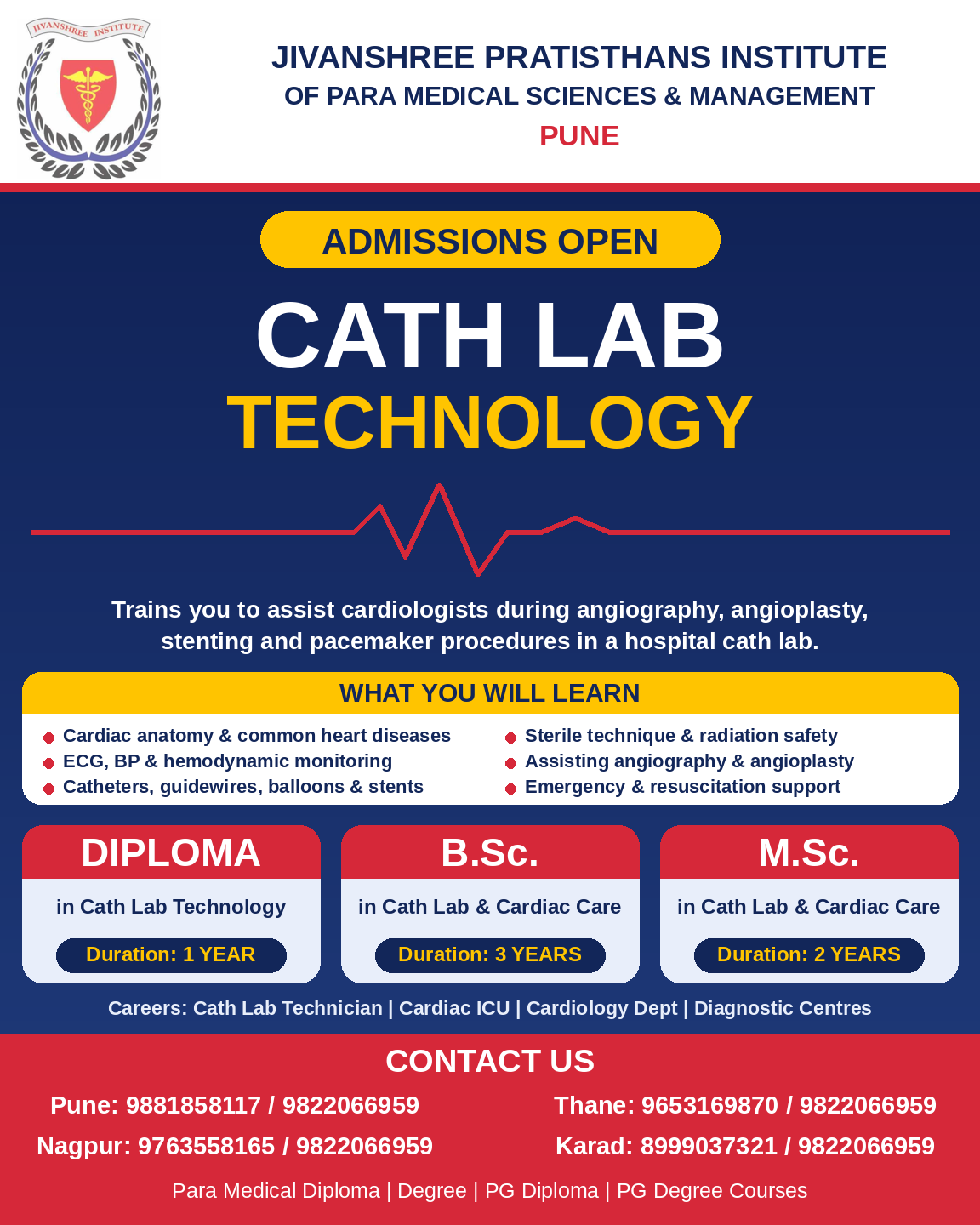
Diploma in Cath Lab Technology (1 year)
Eligibility: Usually 12th pass with science (physics, chemistry, biology), often with about 45-50% marks. Some institutes also accept DMLT or other allied health backgrounds.
Who it suits: Students who want the quickest route into a hospital job.
What you study
Basic cardiac anatomy and physiology
ECG and blood pressure monitoring
Cath lab equipment, catheters, guidewires, balloons and stents
Sterile technique and infection control
Basics of radiation safety and fluoroscopy
Emergency and CPR support
Training: Hospital posting or internship, where you see angiography and angioplasty procedures and assist the senior technologist.
Jobs: Junior cath lab technician or assistant, ECG or cardiac ICU technician, and diagnostic centre roles.
B.Sc. in Cath Lab and Cardiac Care (3 years)
Eligibility: 12th pass with science (physics, chemistry, biology), often needing a minimum aggregate.
Who it suits: Students who want a proper degree, better long-term growth and the option to study further.
What you study
Everything in the diploma, in much greater depth
Human anatomy, physiology, pathology and pharmacology
Cardiology in detail (coronary artery disease, valve disease, arrhythmias, heart failure)
Hemodynamics, angiography, PTCA (angioplasty) and pacemaker/device procedures
Radiation physics and safety, imaging techniques
Emergency cardiac care, ACLS and BLS
Research methods and hospital management basics
Training: Extended clinical postings across the years, and some universities add a compulsory internship (making the total closer to 4 years).
Jobs: Cath lab technologist, cardiac care technologist, and roles in cardiology departments and cardiac ICUs. You can also work as a clinical or application specialist with medical device companies. The degree is easier to use for jobs abroad, though overseas practice usually needs extra certification (for example RCIS in the US).
M.Sc. in Cath Lab and Cardiac Care (2 years)
Eligibility: B.Sc. in Cath Lab / Cardiac Care Technology or a related allied health degree, with the minimum marks the institute or university requires.
Who it suits: Graduates who want senior technologist, teaching, supervisory or research roles.
What you study
Advanced cardiac procedures and interventional techniques
Advanced hemodynamics and cardiac imaging
Cath lab management and quality control
Research methodology, biostatistics and a dissertation or project
Teaching and supervision skills
Training: Advanced clinical work in busy cardiac centres, plus your research project.
Jobs: Senior cath lab technologist or cath lab in-charge, lecturer or tutor at paramedical colleges, clinical research roles, and senior positions with device companies.